The child of my child
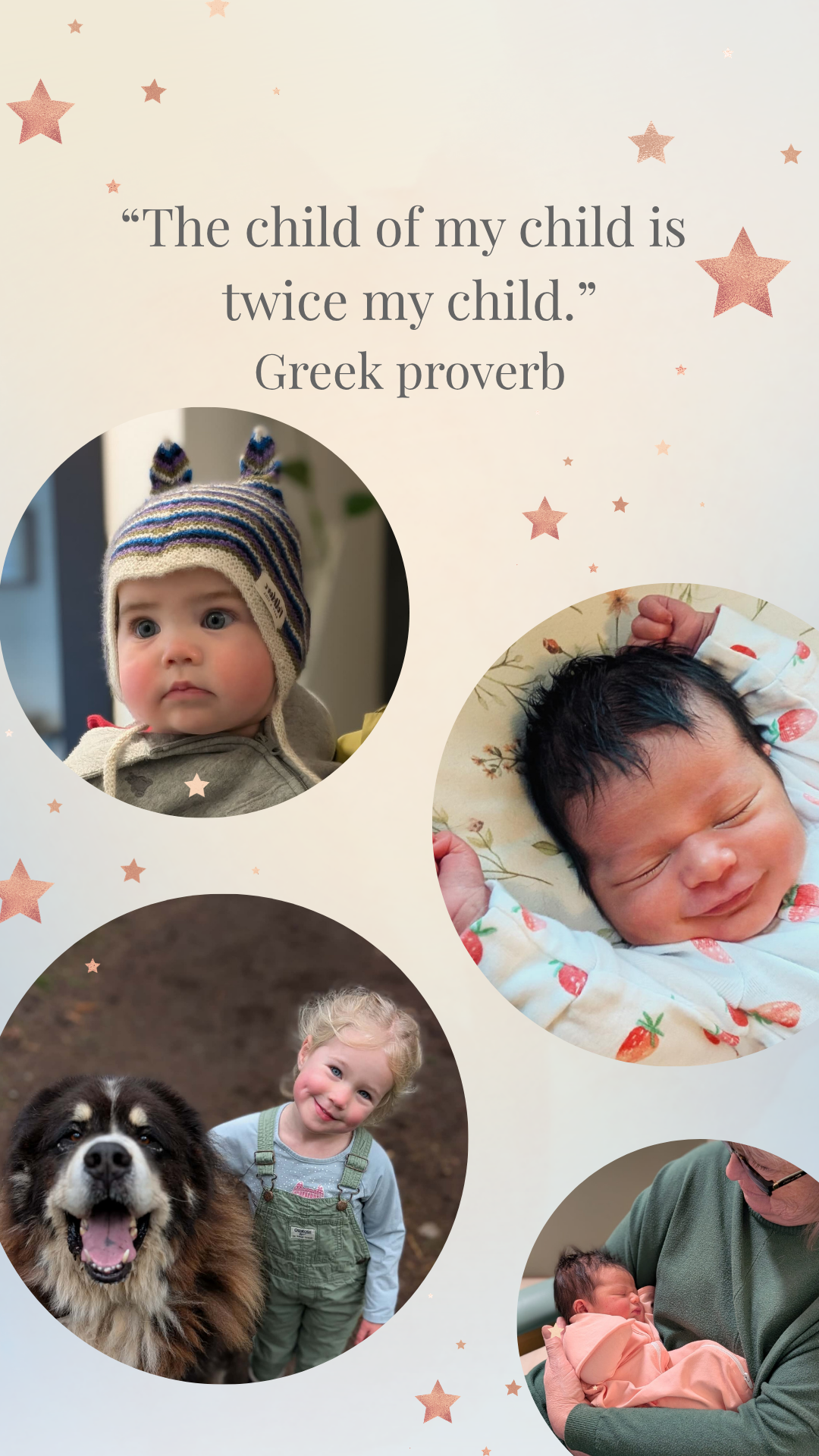
We arrive to find our son-in-law waiting at the entrance to the maternity wing. Hugs, kisses, congratulations. He walks us down the hall, and I see my youngest daughter standing in the doorway of her room. Hugs, kisses, congratulations. We walk into the room, and there she is, our granddaughter. Fast asleep, a full head of hair, her skin as soft as velvet. Love at first sight.
Curled up in bed, drinking coffee with my husband. Nestled between us, our four-year-old granddaughter is enjoying her coffee, a cup of warm milk, with a dash of chocolate syrup and vanilla cream. This has become a ritual whenever we are together. A deep contentment settles over me as she nestles against me.
My oldest daughter sends me a video of my 9-month-old granddaughter. She is almost walking. The video shows her at a fast crawl across the living room, a toy clutched between her teeth. I wonder if she is copying the dog. No, she has discovered the fastest way to transport toys across the room is between her teeth. I laugh, filled with joy.
I adore my daughters. But it is not the same as what I feel for my three granddaughters. The daughters of my daughters.
Benefits of being a grandmother.
It is no surprise that research substantiates the benefits of being a grandmother.
Grandchildren make you happy.
Grandparents tend to have better self-reported health, happiness, and less loneliness than their peers who don’t have grandchildren.
Positive interaction with grandchildren is more likely to release feel-good hormones, such as oxytocin and endorphins. Grandmothers seem to have more of the feel-good hormones, which boost emotional empathy and bonding, and reduce stress.
Grandchildren can improve your health.
Grandchildren get you moving - whether changing diapers, chasing a crawling baby, or playing soccer in the backyard. Research confirms that involved grandparents are more physically active and less sedentary than adults of a similar age who don’t engage in this type of childcare.
Grandchildren can keep you sharp.
Grandparents, especially women, tend to have higher cognitive function when compared to those who do not engage with grandchildren.
Grandma Brain
But what is behind these deep emotions that I, like many of you, feel for my grandchildren? I often say that my granddaughters have filled a space in my heart that I did not know was empty. I love my daughters but what I feel for my granddaughters is completely different.
It is called grandma brain. Dr James Rilling led a research study at Emory University on the brains of older women. The study involved scanning the brains of women as they viewed photos of their grandchildren, ages three to twelve, and photos of other children. The findings? Grandmothers are geared towards feeling what their grandchildren are feeling.
The research revealed that the areas of the brain associated with emotional empathy spark when grandmothers view photos of their own grandchildren. “That suggests that grandmothers are geared towards feeling what their grandchildren are feeling when they interact with them. If their grandchild is smiling, they feel the child’s joy. And if their grandchild is crying, they feel the child’s pain and distress.”
Do my parents love my children more than they love me?
While grandmothers have emotional empathy with their grandchildren, when they view pictures of their adult children, cognitive empathy, the ability to understand what another person is feeling and why, is activated. This suggests that we are trying to cognitively understand our adult children, rather than experiencing this more direct emotional connection.
“Emotional empathy is when you’re able to feel what someone else is feeling, but cognitive empathy is when you understand at a cognitive level what someone else is feeling and why,” Rilling said.
This blog post includes content previously explored in my February 2025 post, Grandma Brain.